How to make money on mobile, in three easy steps

I figured, in response to many questions and comments, it was only fair to get a little wonky for a moment about who actually is making money on mobile, or how a site or start-up might try a mix of potentially successful strategies in the future. Here are my guesses.

First, the only apps and companies making significant money on mobile right now are making most of that money off in-app purchases. The apps are free, and if you want upgrades like extra jewels, more levels, additional features and so on, you pay small amounts of money over time. Research house IHS speculates that in-app purchasing would generate $5.6 billion in revenue in 2012, up from $970 million in 2011. That number would equal fully 64 percent of app revenue.
And in-app purchases can take all kinds of forms: it doesn't just have to be buying extra jewels in Bejeweled 2 or the Mighty Eagle to get you out of your Angry Birds jam. It's a popular option in photo filter apps, fitness apps like Skimble are trying it for additional workouts, and the model works fine for subscriptions, as well.

Just buy your way out of trouble, with Mighty Eagle.
Amazon just started testing in-app purchasing, and while it appears that only 2 percent of Android apps offer in-app buying, that really just means it's kind of an untapped market. It's a proven winner, too: 72 percent of revenue from App Store titles on iOS come from apps with in-app purchasing.
So, that's one obvious mixer in the money-making cocktail we're creating here.
The next is retail and leads: a company gets paid because users click on coupons, take advantage of a local deal, or buy things that are aggregated on a mobile site or app. I know Groupon's current stock price would seem to indicate that local deals are a dead end, but I've never seen a busier cul-de-sac. There's still something to the idea of local offers -- maybe not local deals that feel a little off, somehow, but to the concept of letting you know what's around you when you've got your nose glued to your smartphone while you're walking.
Plus, there are in-app commerce opportunities galore. Apps like Karma, which we profiled at South by Southwest, have a simple premise: aggregate products, make it super easy and social for you to buy gifts for people, and then get paid every time you buy one of said gifts. (Why Facebook, for example, doesn't have gift-giving integrated all on its own is just beyond me.) Start imagining a fun, easy-to-use app that's social, offers in-app upgrades, and lets you buy really great curated items either as gifts or based on your interest and location...and you start feeling like you've got a winner on your hands.

Social gift-giving app Karma lets you send actual, real-life tasteful gifts to your Facebook friends.
(Credit: Karma)
Then, of course, you've got the booze in the shaker: ads. Advertising is still the biggest moneymaker in mobile -- it's just had a slow takeoff. You can't blame Facebook entirely for not making any money on mobile (although they should have seen the mobile shift coming and made some alternate plans). Mobile advertising accounts for just 29 percent of mobile revenues because advertisers have been slow to jump in the pool. That means, as Mary Meeker pointed out this week at All Things D, that there is massive growth potential in mobile advertising.
Right now, advertisers are concerned that maybe mobile ad tracking isn't as detailed as Web tracking; publishers are figuring out how one ad in an app or on a mobile Web site can make up for five or 10 ads on a full-sized Web page; everyone is trying to figure out mobile CPMs and targeting that isn't too creepy and how to work with ad networks that can sometimes be more trouble than they're worth.
But as I said earlier this week, these issues will sort themselves out, especially as advertisers and publishers start to see how much money is really on the table. Maybe that money will come in smaller increments, and it will take a creative combination of money-making strategies. But it'll happen; only question is who will get the proportions right first.

New Apple guide details iOS security features

Quietly released guide outlines the security architecture, encryption, and data protection features on the mobile operating system.

Apple has quietly published a detailed security guide for its iOS operating system, suggesting that the company, known more for keeping technical details secret, is embracing a more transparent approach to security.
Apparently released late last week, Apple's iOS Security Guide (PDF) outlines the security architecture, encryption, and data protection features of the operating system that powers iPhones, iPads, and iPod Touch devices.
"For organizations considering the security of iOS devices, it is helpful to understand how the built-in security features work together to provide a secure mobile computing platform," the guide says in its introduction. It goes on to encourage business "to review their IT and security policies to ensure they are taking full advantage of the layers of security technology and features offered by the iOS platform."
Coupled with the App Store submission process, the guide boasts that code signing, sandboxing, and entitlements "provides solid protection" against viruses and malware. Indeed, the guide discusses in detail the process of code signing, which controls which user processes and apps are allowed to run on the OS:

To ensure that all apps come from a known and approved source and have not been tampered with, iOS requires that all executable code be signed using an Apple-issued certificate. Apps provided with the device, like Mail and Safari, are signed by Apple. Third-party apps must also be validated and signed using an Apple-issued certificate. Mandatory code signing extends the concept of chain of trust from the OS to apps, and prevents third-party apps from loading unsigned code resources or using self modifying code.
The document also discusses how address space layout randomization (ASLR) can prevent memory corruption bugs:

Built-in apps use ASLR to ensure that all memory regions are randomized upon launch. Additionally, system shared library locations are randomized at each device startup. Xcode, the iOS development environment, automatically compiles third-party programs with ASLR support turned on.

The guide's publication is important because it seems to be the first time Apple has publicly discussed the aforementioned features. It also seeks to dispel the theory that Apple creates devices for consumers rather than the corporate market.
"Apple is committed to incorporating proven encryption methods and creating modern mobile-centric privacy and security technologies, to ensure that iOS devices can be used with confidence in any personal or corporate environment," the guide concludes.

Google: Chrome's No. 1 (or 2) worldwide


StatCounter, Net Applications, pah. The browser market share figures are weighted, inaccurate and vary day by day. Google, with a firm grasp of its own numbers, gives its assessment.


The global browser numbers race between Chrome and Internet Explorer remains highly contested, but Google has sent the strongest signal yet that Chrome holds the crown as the Web browser leader.
Google Chrome senior vice president Sundar Pichai, speaking at D10, started off noting Chrome's growth:
"Chrome grew roughly 300 percent last year -- we have hundreds of millions of active users. We have many ways of looking at it. You can argue about the data, but in general I think we have gained substantial mindshare since we've launched the product."
Amid the hedging, he went on (emphasis mine)::
"I think it's fair to say that we are number one or number two in all countries in the world. It's fair to say that roughly a third of people are using Chrome; I think it's much more than a third in the consumer space. Most users in enterprise use IE because it takes a long time for that space to upgrade."
Pichai added:
"There are places where our share is over 50 percent today. I think the speed of Chrome is much more notable when you have a slow connection."
What could be seen as a bold statement could also be seen as a Dewey victory. Having said that, only Google knows exactly how many downloads it's had for Chrome, but downloads do not equal installs or active use.
Plus, at least one browser counter suggests Chrome really is in the lead.

StatCounter said Chrome overtook Internet Explorer in May, even after it took into account a pre-rendering adjustment. The research firm said the move did not have any "significant" impact on its statistics.
It currently sees Internet Explorer at 32.12 percent, with Chrome a fraction ahead at 32.43 percent.
It's also worth noting that it is not the first time Chrome has jumped ahead of Internet Explorer, according to the analytics firm. Chrome was the "world's top browser" for a single day on March 18. It's likely the figure jumped on the Sunday because the vast majority were at home and not at the office, where Internet Explorer still dominates the work environment.
But it doesn't mean Internet Explorer can't recoup its losses and claw back the market share it's losing.
On the flip side, Net Applications pegs Internet Explorer at 54 percent with Firefox ahead of Chrome at 19.7 percent and 19.6 percent respectively.

Samsung: We've sold 50M Galaxy S and S II phones

The company is touting 24 million in unit sales for the Galaxy S and 28 million for the Galaxy S II to date.
Samsung's Galaxy S II has racked up 28 million in sales since its debut. 
Samsung's Galaxy S II has racked up 28 million in sales since its debut.
More than 50 million Samsung Galaxy S smartphones have been sold since the original phone debuted in 2010, according to the Korean handset maker.
Plugging its achievement in a news release today (English translation), Samsung said that 24 million units of the first Galaxy S phone have hit the sales market since June 2010, followed by 28 million Galaxy S II phones over the past year.
Samsung uses the term "sales." But it's important to note that the company is actually referring to shipments since the numbers point to how many units have been shipped to retail channels. However, the hot demand for the Galaxy S phones means there's likely to be little difference between shipments to retailers and sales to customers.
The news release says that the 50 million in record sales last year was double that of the entire smartphone market. Ironically, the English translation refers to that as a "shame." It's certainly a shame for the rest of the industry, but a high point for Samsung. Collectively, Samsung and Apple have scooped up virtually the entire mobile phone landscape, leaving little but scraps left over for the remaining players.
The company's Galaxy Note has also joined in on the festivities, reaching 7 million in unit sales since its launch last October.
Samsung is probably expecting even hotter sales this year.
The company just released the Galaxy S III phone across parts of Europe and the Middle East, with other regions slated to pick it up early this summer.

Friday Poll: Is Facebook mobile enough for you?

In the shadow of a less-than-stunning IPO, Facebook now faces questions about its long-term viability, especially in the face of the onward march of mobile technology.
Facebook for iPad log in screen 
 Facebook for iPad is an app with a rough reputation.
While Facebook is a pillar of online social media, it hasn't really proven itself to be a moveable feast when it comes to mobile. In a piece this week that got a lot of you talking, CNET Executive Editor Molly Wood looks into how mobile could eventually be the social-media giant's death knell.
Facebook's mobile apps have been notoriously sketchy in quality. It's at the point where I don't even try to download the latest iPad app update, I just use my browser when I want check in on the site.
In IPO documents, the company admitted that mobile is an issue, especially the ability to monetize views coming in from mobile apps.
Facebook is in no danger of immediate collapse, but the trend toward mobile access is undeniable. The IPO documents also included a figure of 425 million monthly active users accessing Facebook on a mobile device in December 2011. That number is only expected to grow.
Facebook may eventually go the way of MySpace. If that happens, a mobile-native replacement may be the hot new commodity that pushes it off the social-media cliff.
This brings us to how you're feeling about Facebook's mobile efforts. Have you given up on the iPad app? Do you use your smartphone's browser to access Facebook rather than tangle with an app?

Google told by EC to play ball or face a trial

The European Commission is warning Google to change its search methods or the company will be forced into court over antitrust issues.
Google has been given an ultimatum by the European Commission: straighten up or we'll take you to court.
The search giant has been under the microscope of the EC over complaints that it has stifled competition in the search market by favoring its own businesses. Several companies have alleged that Google purposely tweaks its search results so that its own sites appear before those of potential rivals.
Up until now, the EC been in no rush to launch formal charges against Google. But now the war of words has been ramped up a few notches.
Joaquin Almunia, the European Commission's head of competition, has given Google a deadline of July 2 to change its search results and ad rules or face a trial and the possibility of a hefty fine, says the Guardian. The deadline and threats were spelled out in a letter sent to Google in light of concerns over the company's dominant position in Europe.
A spokesman for Google told cnet simply that "we continue to work cooperatively with the European Commission."
But the company was a bit more detailed in a statement to the Guardian:
"We operate in over 100 countries around the world, and the Internet is disruptive by its nature. It's understandable that our business should attract scrutiny and sometimes complaints in a few of those countries. We're always happy to answer questions authorities may have about our business."
A Google spokesman also suggested that "we've been co-operating with [the EC's] investigation and that issues can be solved through conversation," the Guardian added.
Almunia has indicated a willingness to settle with Google to avoid a courtroom showdown, but his patience now appears to be wearing thin.
Google is also facing similar antitrust woes in other countries.
The U.S. Federal Trade Commission has hired hotshot attorney Beth Wilkinson to determine whether the company has violated antitrust laws in the United States.
Some experts believe the FTC is using Wilkinson's reputation as a tough litigator to force Google to settle or wind up in court.

Nano-SIM design gets green light -- but did Apple win?

According to ETSI, it has finally come to an agreement on the Nano-SIM standard. The only issue is, it didn't say which company won.
The European Telecommunications Standards Institute (ETSI) announced today that its committee has come to an agreement on the Nano-SIM standard. There's just one issue: the organization didn't say which technology was chosen.
According to ETSI, its Smart Card Platform Technical Committee agreed to a new form factor for the SIM card, called the "fourth form factor." The form factor, better known as the "Nano-SIM," will be 40 percent smaller than the current, smallest SIM cards, but will be backward-compatible with existing SIM designs.
The Nano-SIM had become a lightning rod of controversy over the last several months as Apple decided to take on Nokia, Research In Motion, and Motorola to deliver its own technology for the standard. The initial vote to determine whether Apple's technology or that from the other companies would become the standard was scheduled to be held in March, but ETSI decided to delay it so it could "achieve a broad industry consensus."
 The Nano-SIM will be much smaller than these SIM cards.
The Nano-SIM will be much smaller than these SIM cards.

To improve its chances of winning the vote, Apple reportedly moved to "significantly" increase its voting power earlier this year by registering six European subsidiaries with the ETSI. According to ETSI rules, any subsidiary with 8 billion euros or more in revenue is allowed up to 45 votes. At that time, Nokia had the most votes in its corner with 92.
In an apparent attempt to ease tensions for the first vote, Apple reportedly offered ETSI member companies the option to use its Nano-SIM standard at no charge. However, in order to receive the freebie, the companies would have been required to offer the "same terms in accordance with the principle of reciprocity" on all industry standards they might own.
Based on the events that followed, Apple's counterparts apparently shunned the offer. Earlier this month, RIM, Nokia, and Motorola instead tried a compromise of their own by unveiling a new design for its Nano-SIM that incorporated many -- but not all -- of the features found in Apple's option. It's not clear if Apple responded favorably to the compromise, thus paving the way for today's vote to go to the other side.

RIAA: Google takedown numbers misleading

Google imposes an artificial limit on the amount of requests a copyright owner can make, which means the data it provides on infringing sites is off, the music industry group says..

The Recording Industry Association of America has claimed that Google's transparency report detailing takedown requests of copyright material is misleading, because the search giant limits the number of notices a company can make.
Google's statistics, since July 2011, show that Microsoft made the largest total number of takedown requests of any company, asking for a total of 2,544,209 URLs to be removed from Google's search results, which contained files or links to BitTorrent files that the company believed to be infringing on its copyrights.
The RIAA fell to third on the list, with 439,546 URLs targeted, behind NBC Universal at 1,054,843.
However, the RIAA believes that this score is misleading. The organization's executive vice president of antipiracy, Brad Buckles, wrote in a blog post this week that the data doesn't represent the total number of infringing Web sites found in Google's search results, because Google imposes an "artificial limit" on the amount of requests a copyright owner can make.

What could Apple have up its sleeve for WWDC?

A new version of iOS and new apps for maps and photo sharing may be among the items announced at this month's developers conference, says a Sterne Agee analyst.
 
Apple will likely unveil a new lineup of Macs at its upcoming WWDC, but one analyst thinks the bigger news will be in the software arena.
The iPhone maker is expected to announce iOS 6 at its annual Worldwide Developers Conference, which kicks off June 11, says Sterne Agee analyst Shaw Wu. Apple announced iOS 5 at last year's WWDC, though the OS didn't reach the market until October.
A new Maps app also has the analyst and other Apple watchers buzzing. Based on industry checks, Wu sees a new in-house Maps app replacing the current Google Maps on all iOS devices. The new app will tap into the power of 3D, offering users the ability to view 3D versions of various locales.
"From our understanding, it is internally developed and will be radically different and better than existing Maps from others," Wu said. "We hear the key reason why [Apple] decided to do this is that it believes it can deliver a much better user experience in Maps, not to mention provide further differentiation for its mobile devices business."
Reported details and photos of the new Maps app have already leaked onto the Internet, courtesy of blogging sites BGR and 9to5Mac. One photo in particular clearly displays an option to switch to 3D mode.
Also on track for WWDC may be enhancements to the iOS camera and photo apps, according to Wu. Users can currently use the Photo Stream feature to share photos via iCloud, but many still rely on third-party apps such as Instagram, the analyst said. The new features would enable better sharing directly through the built-in photo app.
But the new Macs will be nothing to sneeze at. Wu expects the full lineup of Macs to benefit from an overhaul.
The iMac, MacBook Pro, MacBook Air, and potentially the Mac mini and Mac Pro will likely be upgraded to Intel's Ivy Bridge chipset, offering better performance and superior graphics.
And speaking of graphics, several Mac models are expected to follow their mobile counterparts by sporting high-definition Retina displays.

Asus, Acer, Toshiba to unveil Windows 8, RT tablets

Windows tablets from Asus and Toshiba at Computex should tell us more about the progress of Windows RT.
A Texas Instruments-based Windows RT tablet. To date, all Windows tablets running on ARM chips have been behind glass.


A Texas Instruments-based Windows RT tablet. To date, all Windows tablets running on ARM chips have been behind glass.
(Credit: Brooke Crothers)

Asus, Acer, and Toshiba will roll out a mix of tablets based on both Windows 8 and Windows RT at the hardware-centric Computex trade show next week, according to Bloomberg.
Windows 8 will run on chips from Intel, while Windows RT is powered by ARM chips from Nvidia, Qualcomm, and Texas Instruments.One Asus tablet uses an Nvidia chip, said Bloomberg. CNET reported earlier in the month that Asus and Lenovo are expected to bring out Windows RT tablets built around Nvidia Tegra 3 chips.
A Windows RT-based Toshiba tablet is using Texas Instruments' silicon, according to Bloomberg.
This jibes with what sources have told CNET. Only a handful of Windows RT devices will be released initially from vendors such as Asus, Acer, Toshiba, Lenovo, and possibly Hewlett-Packard, as Microsoft wades slowly into new Windows waters. Windows RT is the first mainstream desktop-class Microsoft OS to run on ARM processors.
One of the burning questions is whether conference goers will actually be able to use the devices. To date, Windows RT tablets displayed at trade shows and conferences have been inaccessible -- always encased in glass.
Acer, meanwhile, will show a Windows 8 device running on top of an Intel chip, according to Bloomberg. And Asus will show off a second device based on an Intel chip.

We don't have to be stuck in the past. Applications don't have to work the way they've always worked. At least ARM on mobile devices forces efficiency of code. It's good that it requires applications to be re-written with a new mind set.

If somebody really needs x86 power apps, I'm sure somebody can really find a netbook or ultrabook to meet one's need. I'm sure Android and Windows will very quickly run to a competitive device that runs x86, if competitive. What's the difference between an ARM app and an x86. Can't the software be exactly the same if the interface is the same (e.g. mouse and keyboard)?

Whats the difference in ARM and x86 apps???
Take a look. ARM apps have about 10% of the functionality of their x86 counterparts. Usually less!
I get what your saying about code efficiancy, and the x86 platform being bound by legacy restrictions in its instruction set. But seriously, ARM is just as bound by its RISC architecture. It will always take many instructions to perform an instruction that an x86 processor can acomplish in one, and the biggest factor... Intel.
Intel are several generations ahead in their fabrication technology than any other comercial fab plant on the planet. For years they have been pushing the bounds of Moors Law, and they have only recently switched their focus to low power portable devices.
Intels relentless "Tick/Tock" cycle is now pushing the boundries in this direction. 22nm fabtech. 3D transistors. 15nm fabtech.
It is very hard to compete with this. Ask AMD.
Once upon a time, if you wanted to make the fasted desktop computer in the world you would have been using AMD silicon.
In the future, if you want the fastest and most energy efficient tablet, you will be using Intel.
Any questions?

Intel is still several generations behind on power management. Latest ARM SoCs have fifteen to twenty power domains that are actively switched based on current processor load and usage.

There are also fully asynchronous ARM designs that allow each core to dynamically ramp clock rates based on software loads.

Current Intel SoC designs are lacking in both of these areas.


Apple iPhone enters prepaid world with Cricket

The regional prepaid carrier will start selling the smartphone on June 22 without a contract. But it will cost you dearly.
(Credit: Apple)
Apple's iPhone will make the leap to the prepaid world through Leap Wireless's Cricket wireless service.
The regional prepaid carrier plans to sell the iPhone on June 22, although its no-contract plans means a higher upfront cost. The 16GB iPhone 4S will cost $499.99, while the 8GB iPhone 4 will cost $399.99.
The iPhone moving to Cricket marks the continued expansion of the availability of Apple's blockbuster device, highlighting the company's push to get the device in as many hands as possible. The iPhone is an unusual device to hit the prepaid world, since it is such an expensive product relative to other prepaid phones.
The iPhone will be sold with a $55 no-contract plan that includes unlimited calling and text messages. The plan also includes 2.3GB of data, after which the carrier will throttle, or slow the connection down.
Despite a hefty price tag, the iPhone's popularity should help Cricket recapture a bit of momentum lost in recent quarters. The company, as with other prepaid services, has seen growth slow as the larger carriers enter the prepaid business.
"Launching iPhone is a major milestone for us and we are proud to offer iPhone customers attractive nationwide coverage, a robust 3G data network and a value-packed, no-contract plan," Leap CEO Doug Hutchison said in a statement.
While prepaid carriers typically don't offer subsidies, it appears Leap is paying Apple a small subsidy to keep the iPhone somewhat reasonably priced. AT&T and Verizon Wireless lists the 16GB iPhone 4S for $649.99 without a two-year contract.
Prepaid customers are required to buy an iPhone through Cricket; they are unable to bring in an iPhone from another carrier.

That pesky taller iPhone 5 screen pops up on video

Wondering just how much bigger that next-generation iPhone screen might be? A new video of the leaked part shows it getting cozy with an iPhone 4S.
An iPhone 4S next to the purported screen part. 
An iPhone 4S next to the purported screen part.
(Credit: Macotakara)

What may or may not be the larger screen adorning the next iPhone has been captured on video.
No, you won't see the actual screen. Instead it's the glass panel that your fingers and face grease up.
Japanese Apple blog Macotakara today published a visual comparison of the mystery part that's been floating around for the past few days, putting it next to the existing iPhone to show just how much bigger the screen would be:
The two notable changes, of course, are that the screen is taller, and that the FaceTime camera has been moved to the very top, center of the device -- just as it is on the iPad. It also matches up with the look of the purportedly leaked parts that surfaced last week, as well as the ones posted on Apple blog 9to5Mac this week.
Numerous reports have suggested Apple's moving to a slightly bigger screen with its next iPhone. The change is expected to bring a change in both resolution and aspect ratio, both of which might be new considerations for developers on Apple's platform.

some observations :
     *The video clearly shows a new glass front which shows a larger screen size, and some other tweaks.
I have no idea where you got "the same design from 2010" from. Considering the iPhone has never gotten a screen size change, this is clearly a departure from previous iPhones and their minuscule screen sizes (if the video isn't a fake).
And nobody said this was revolutionary, and Apple hasn't used that tagline to market their products in a few years (but Steve Jobs did overuse the term). 
  *You're expecting a worse design? Given how many components need to be in the unit, the size of the battery to power them, I'm not sure I can think of a better enclosure then antenna as frame then toughened glass front and back. Can you?

Apple design is primarily about being "efficient", the current iPhone design (love it or hate it) is about as efficient as you can get (by efficient I mean small volume with the minimum of extraneous finishing - essentially that's some silver decals on the rear glass and black or white paint).

If there is to be "revolution" (or more likely "innovation") I'd expect it to be in the software. Probably a far better mapping application, Siri out of beta, tighter integration social networking, and if we're getting really innovative, a way to expose OS X style 'services' on iOS.

Oh and some people think it'll be taller too. What do I want out of it? Shipping for October would be nice (contracted till then).
  *"I'm not sure I can think of a better enclosure then antenna as frame then toughened glass front and back. Can you?"

Yes. Actually, just about anything but that. The tough polycarbonate aka "cheap plastic" that Samsung uses, the laminated carbon fiber of the Motorola Droid Razer, the aluminum construction of the HTC Evo series... anything but fragile glass that shatters so easily.
  *I had an Iphone 4 and loved it. I stopped using it because of an insurance problem I had when I damaged the phone. I was offered an HTC thunderbolt at a reduced price and have been using it ever since. Let me tell you what I miss. I cannot seamlessly switch between wifi and mobile networks. When I leave the range of my wifi network at school my device cuts off Pandora and it will stay off until I go back in, turn off wifi and my cellular network will then pick up the signal. Second, half way through my afternoon I have to throttle my phone by turning off 4g and switching to 3g so that my expanded 3100 battery will not die. When I had a stock battery I could not make it 4 hours on 4g. Third, I hate to have to have a kill app switch. I have to remember to use it every few hours so that my phone stays working fast and the battery lasts. Fourth, when I leave New Orleans (4g city) and head out of town I have to remember to turn off 4g if not my phone will constantly be searching for the signal, again draining my battery. Finally, android does not have an eco system worth mentioning. I am in between the Galaxy S3 or the new Iphone. Why, because there is no denying that once you have moved on to a larger screen you cannot go back.
  *I don't mind it being a bit taller. The screen really did seem tiny (especially when I come from using a Droid Razr). From some of the other stories C-Net has published, including the ones about the shape, general design spy shots, I think it will be a great design. I'll be honest, the Iphone 4 is still IMO the most beautiful phone on the market. The shape just seems end-all perfect and the sharp edges and glass are still pretty stunning even with it being a few years old now. I'll welcome the new design which should just cut down on its thickness and make the screen the proper size.

The specs are another story... I'm not banking on huge changes, but hey, Apple follows will eat it up.
  *I think they can squeeze a larger screen just on the current model by making the home button smaller and the speaker area smaller. If they increase the length of the phone it shouldn't be by much as long as they utilize the current space better.

I would also like to see higher data transfer speeds also on the next model. If you have a 5 minute video you know how long it takes to transfer that to iPhoto.
  *I would bet that the iPhone is getting longer to accommodated a bigger battery for the upcoming 4G chipset, and the larger screen is just a byproduct of that happening.

Btw, the one thing I love about my iPhone 4 is the smaller form factor compared to the android competition. If I can't fit it in my pocket than I don't want it. I'll make my judgement when I see the final version, but if the iPhone grows significantly than I'll look at a different model.

Latest iPhone 5 leak teases more RAM, map tweaks

The latest in a series of purported iPhone 5 leaks suggests Apple is doubling up on RAM and boosting its graphical prowess.
While Apple's next iPhone isn't expected to arrive until later this year, details of what the device will look like and how Apple might change some of its key software features continue to trickle out.
The latest comes from 9to5Mac, which earlier this week posted purported photos of the front and back of upcoming iPhone models. Today the blog has a follow-up with details of a development version of the hardware, and iOS 6 -- the next major version of iOS Apple is expected to debut at the company's developer conference in a few weeks.
A purported shot of the new Maps app interface.
(Credit: 9to5Mac)
While Apple's next iPhone isn't expected to arrive
Citing an unnamed source behind the specs, 9to5Mac says the prototype unit is running on an "ARM S5L8950X" processor, a model number that's higher than the ones found on Apple's latest iPhone 4S and third-generation iPad. No details were offered about its speed versus existing chips, short of a mention of a new graphics chip. The outlet also claims the phone will sport 1GB of RAM, up from the 512MB that ships on the iPhone 4S.
On the software side, 9to5Mac suggests "Apple is far along" with iOS 6. That includes another shot of an updated maps app with imagery not from Google, which looks similar to the one posted earlier this week by mobile tech blog Boy Genius Report.
Apple is once again expected to introduce its next iPhone in the fall instead of the summer. The change last year moved up the public unveiling of iOS 5 in time for the company's annual developers conference, as well as timed the iPhone 4S and iOS 5 for a release closer to the lucrative holiday shopping season.

Has the iPhone lost its cool factor?

With the iPhone seemingly everywhere -- including prepaid courtesy of Cricket -- it isn't quite as special as it used to be. That's bad news for the carriers.

Is the iPhone still cool?
(Credit: Apple)
commentary Let's face it: the iPhone just isn't cool anymore.
It's sad, but true that there's a reverse correlation between availability and coolness. The harder it is to obtain something, the more highly coveted it is.
Apple's decision to offer the iPhone 4S and iPhone 4 to prepaid wireless provider Cricket may have tipped the scales away from the cool end. With Cricket in the fold, the iPhone is virtually everywhere (T-Mobile, sadly, is still left outside looking in), hitting a critical mass of availability. The iPhone has gone from a gadget of the tech elite to the safe device you buy for your mother.
The original iPhone was a status symbol that drew in gawkers whenever it was pulled out at bars or parties. Despite all the complaining about AT&T's network, the fact that it was on only one carrier gave it an air of exclusivity that likely fueled its ongoing hype. People stuck on Verizon Wireless and Sprint Nextel contracts couldn't get the phone, which only made them want it more...

When AT&T's exclusivity ran out, Verizon Wireless managed to stir up some buzz when it got the iPhone, even luring in Daily Show correspondent John Oliver to the press conference for a bit. Then Sprint Nextel got it, and the carrier was feeling pretty good about itself for joining the cool kids' table.
But what followed couldn't have made the larger carriers happy: a stampede of regional carriers such as nTelos, C-Spire, and Alaska Communications that hopped on the iPhone bandwagon too. Cricket is the latest to join the club, which will mark the first time the iPhone will be sold under a no-contract model.
Now, I'm all for getting every product to as many people as possible, and giving folks all available options. There's also nothing wrong with being the safe choice for consumers.
But I wonder if the broad access to the iPhone hurts its street cred. How cool or special is the phone if everyone around you owns one?

Syndrome: Oh, I'm real. Real enough to defeat you! And I did it without your precious gifts, your oh-so-special powers. I'll give them heroics. I'll give them the most spectacular heroics the world has ever seen! And when I'm old and I've had my fun, I'll sell my inventions so that *everyone* can have powers. *Everyone* can be super! And when everyone's super... [chuckles evilly]
Syndrome: - no one will be.
-- From Pixar's "The Incredibles"
There are real implications for the carriers. What was a boon to AT&T as an exclusive has become a heavy financial burden for nearly all of the carriers. The iPhone is no longer a way for a carrier to stand out; it's become an expensive must-have.
That's particularly the case for Sprint Nextel, which placed a massive financial bet on the iPhone in the hopes that the continued buzz and draw would turn the company's prospects around. When it joined the exclusive pool of iPhone carrier partners, there were only three members. Now there are nearly a dozen carriers offering the phone. Sprint stands out with its unlimited data offer, but it remains to be seen how effective it really is.
You saw the impact of the iPhone in the last two quarters, when strong sales translated to heavy subsidy costs paid by the carriers to Apple. Sprint, which is already on shaky financial ground, was hit particularly hard with an $863 million loss in the first quarter following a $1.3 billion loss in the fourth quarter.
For consumers looking to be different, the iPhone really isn't the phone for them. The only real cool factor left for consumers is nabbing the next iPhone. While Apple will certainly benefit from the hype and attention the next iPhone will garner, there is little benefit it brings to individual carriers, especially if all of the carriers get the same phone.
I liken the mass availability of the iPhone to the original Motorola Razr. When it first emerged at Cingular for $399, it was highly coveted for its ultra-slim design. By the time it was available for Verizon Wireless and I was able to pick one up, much of what made it unique had faded away as it became the default phone for everyone.
Of course, there are a lot of key differences between the iPhone and the Razr. For one, Motorola did little to improve the Razr beyond color changes, while Apple has continually updated the look of the iPhone. The Razr's main appeal was its thin design and sexy look, while the iPhone also benefits from a massive ecosystem of apps, as well as a cloud service that links it to other Apple products such as the iPad and MacBook.
The underlying principle, however, is the same. The more accessible the Razr got, the less value it had for carriers. The carriers are beginning to figure that out about the iPhone now, particularly as expenses mount.
For Apple, moving into yet another carrier is a good move and follows its strategy of getting its products in as many hands as possible. More distribution means more revenue and profit.
But the iPhone in its current incarnation has to be losing a bit of its appeal at this point. The phone is certainly looking long in the tooth. Because the iPhone 4S shares the same chassis as the iPhone 4, Apple's flagship phone has looked the same for nearly two years.
The next iPhone isn't expected to be unveiled for another few months.
The iPhone also benefited over the past few years because there were few comparably cool products on the market. That's changing. Samsung Electronics' has spent the past few years building up its Galaxy S flagship brand to the point where the Galaxy S III commands nearly as much attention. After spreading itself too thin last year, HTC has rebounded strongly with the One X. Even Nokia has its heavily promoted Lumia 900, which targets consumers looking for something different.
All of those phones, which feature fresh designs and colors, will turn some heads. Can you still say the same about the iPhone anymore? Probably not.

Obama takes cyberwarfare to new level, report says

The New York Times is reporting today, citing a host of sources, that the Obama Administration pressed forward with Stuxnet's attack on Iran, and has used cyberwarfare extensively.President Barack Obama has been fighting a clandestine cyberwar against foreign governments and Al Qaeda, and his efforts in that space have far exceeded those of his predecessors, according to a new report.

The New York Times today unleashed a wide-ranging report, adapted from an upcoming book, "Confront and Conceal: Obama's Secret Wars and Surprising Use of American Power," by Times reporter David Sanger, on the Obama Administration's use of cyberwarfare to take on Iran and potentially other countries or entities it views as a threat. Chief among the administration's targets was Iran's nuclear plants, including the Natanz facility targeted by Stuxnet.
According to the Times, the book cites several unidentified security officials who claim that the Obama Administration didn't initiate plans to attack Iran's nuclear facilities -- the Bush Administration did -- but it did accelerate the initiative, known as Olympic Games. And the result of those efforts was none other than Stuxnet.
Stuxnet was first discovered in 2010 after it was found to be attacking the Natanz nuclear plant in Iran. Soon after, security researchers found that it was a highly sophisticated attack designed to attack computers running Siemens software used in industrial control systems. Several countries, including European Union allies of the U.S., expressed extreme concern over the malware. The U.S., however, was relatively tight-lipped on the outbreak.
"The question is where the heck is the Department of Homeland Security?" Joe Weiss, a critical infrastructure security expert, said in an interview with CNET in 2010. "There is no real guidance being given. There is nothing going out to the utilities or other end users talking about the actual compromise of the controller itself."
According to the Times, the seeming disinterest on the part of the U.S. might have been due to the fact that it created the malware. But behind closed doors, according to the Sanger's sources, President Obama was wondering if the country should shut down Stuxnet after it had been discovered due to a "programming error." According to the sources, he was told by his officials to press on, and just a few weeks after it was detected, a new version of the worm took down nearly 1,000 of Iran's centrifuges.
But the U.S. didn't act alone. According to the Times, a special Israel unit collaborated with the U.S. on its attacks on Iran. For the U.S., according to Sanger's sources, working with Israel made sense. For one, Israel has intimate knowledge of Iran, a country it has long viewed as a major threat. The collaboration also helped the U.S. hold off any of Israel's plans to launch a preemptive strike against the nuclear facilities, according to the Times.
If the U.S. and Israel were actually behind Stuxnet and its attacks on Iran, it would confirm rampant speculation dating back to 2010. Soon after news of the attack went public, several security researchers and observers charged the U.S. and Israel with planting the malware -- which was initially delivered through a USB thumb drive -- and taking aim at Iran. Neither country admitted to that, and continue to stay tight-lipped on the matter.
A similar scenario has played out in the wake of the discovery of another worm, Flame. That payload, which was discovered earlier this week, has reportedly been in operation since 2010. Unlike Stuxnet, which was designed to take down physical sites, Flame steals information about targeted systems and stored files, as well as information on the computer display and audio conversations. Iran was the central target for the virus, but it also impacted machines in the West Bank, Syria, and other Middle East countries, as well as Sudan.
Kaspersky Lab, which was first to discover the virus, has said that it believes the malware is "state-sponsored," and fingers have once again been pointed at the U.S. and Israel. Just yesterday, an Israel spokesperson for the country's vice prime minister, Moshe Ya'alon, denied any involvement in the attack. That followed a claim made by an unidentified U.S. official, telling MSNBC that "it was U.S." behind the attack -- a charge the government has not confirmed.
Still, those charges, along with Sanger's recent revelations, seem to confirm that the U.S. is heavily engaged in cyber attacks. Last year, the Chinese government took aim at the U.S. for allegedly attacking its networks, saying that "the U.S. military is hastening to seize the commanding military heights on the Internet."
That followed a claim made by former U.S. national security official Richard Clarke, who wrote in an op-ed piece last year that the U.S. is engaging in a policy known as "active defense," a term that he says the Pentagon uses to mean "offense" in its "daily guerrilla cyberwar."
Looking ahead, Sanger expects more cyber-based activity on the part of the U.S. In fact, one of his sources, a former U.S. intelligence official, told him that the country has "considered a lot more attacks," though many of those have not been initiated.


Apple iPhone 4S


Apple iPhone 4S.........

Pros
Apple iPhone 4S is fast, dual-core A5 processor coupled with its advanced operating system give this smartphone capabilities that have never before been possible.

Cons
Apple iPhone 4S is fast but can't take advantage of even faster 4G cellular networks.

The Verdict
The combination of outstanding hardware, an exceptional OS and impressive apps make this the best smartphone available.


TopTenREVIEWS - Gold Award - Awarded for excellence in design, useability and feature set
Overall Rating


What can a company be expected to offer next when its product is already the best-selling, most innovative smartphone among its competitors? That question has become obligatory whenever Apple debuts a new model of the wildly successful iPhone.
In the case of the Apple iPhone 4S, the answer is that you can expect many important upgrades and even some groundbreaking features. While there are always detractors who will hasten to point out what new smartphones don't offer, we found it easy to select the Apple iPhone 4S as our TopTenREVIEWS Gold Award winner.
The iPhone 4S is the first Apple cell phone to be available from the three largest U.S. carriers, each of which has its own advantages and disadvantages. AT&T has the longest history with the iPhone, having been its exclusive carrier through the first three iterations of the device. With AT&T, you get a 3G data network that is typically America's fastest. The downside is that in some regions, that network can be somewhat less reliable than the Verizon Wireless 3G network. The data load created by the popularity of iPhones has sometimes overwhelmed the AT&T network, but the problem seems to have been largely resolved.
With Verizon Wireless, which already carries the iPhone 4, you arguably get the nation's largest and most reliable network. Though the two biggest carriers' speed and reliability claims echo each company's advertisements, research substantiates those claims. The effect of the popular device's availability on Sprint's network remains to be seen.


Design:

Click to Enlarge
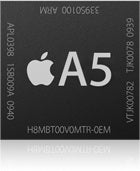
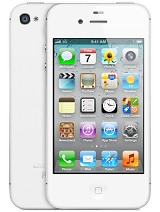
From an external-design perspective, there's nothing new to report with the iPhone 4S. If you've seen the iPhone 4, you've seen the new arrival. Inside, though, it's a different story. At the heart of the device is its A5 processor – a dual-core CPU with a clock speed of 1GHz per core. It's the same processor that powers Apple's iPad 2 and is a fundamental reason that everything on this phone works so well. With the A5, overall device speed is double that of its predecessor, and graphics rendering is reported to be up to seven times as fast, making for superb gaming performance and web browsing. The new antenna design may garner less attention but it's equally significant. The cellular signal of the iPhone 4 could be compromised by things as insignificant as the manner in which the phone is held. The iPhone 4S has two antennas, each of which can both send and receive signals and has the computing power to choose the best one.
The face of the iPhone 4S is dominated by the same 3.5-inch touchscreen that we're accustomed to. Like its immediate predecessor, it features the remarkable Retina display. Packing 960-by-640-pixel resolution into the 3.5-inch screen results in a super dense 326 pixels per inch. In practical terms, that produces razor sharp images for photos, videos and gaming. It also allows you to zoom way in on web content to see as much detail as you could ever want without irritating pixilation.
The size of the iPhone 4S' screen is a matter of some discussion. We once considered it huge by smartphone standards, but now, as the size of its competitors' displays have ballooned, it's smaller than the competition. While larger displays are nice for watching videos and gaming, the device size they demand makes them rather unwieldy to use as telephones. Given the exceptional image quality of the iPhone 4S' display and the way it feels to hold the device given its size, we're perfectly happy with 3.5 inches.

Multimedia:


Click to Enlarge
The iPod Touch has set the standard for portable media players since its introduction, and the Apple iPhone 4S essentially has a built-in iPod Touch. There isn't much more that needs to be said about this phone's stellar capabilities as a music and video player. The camera is another matter. IPhones have been criticized in the past for having cameras that really didn't compare well to other top-ranked smartphones. With the iPhone 4S, that has all changed. The first and most obvious improvement is bumping the camera's sensor count up to 8MP. That puts it right up there with the best phone cameras available.
Digital photography is all about gathering and processing light, and the pixel count plays an important role, but there's much more to consider. As with any type of photography, quality optics are critical, and Apple has added a custom lens with five elements to optimally shape incoming light. The aperture is also a larger f2.4, so more light is available regardless of the shooting conditions. In addition to the sensor and the optics, the A5 CPU's image-processing capability is on par with many DSLR cameras.
Using the camera is simple. With face detection, it optimizes settings for a single subject or up to ten faces for group shots. You can also use the pinch-to-zoom and tap-to-focus features that allow you to instantly designate which portion of any scene is most important.
These features work for video recording as well. The iPhone 4S shoots video in full 1080p HD resolution. Camera shake is virtually eliminated by video stabilization, and you can edit your videos and still photos on the phone itself.

Call Features & Quality:


Click to Enlarge
There are many great things to say about the Apple iPhone 4S, but the absence of 4G access is perplexing. There's no denying that the phone's data transfer speed is better than most devices under most circumstances, but it's not all that it could be if it had access to the Verizon Wireless and AT&T 4G LTE networks or Sprint's WiMax network. One of our favorite relatively new features available on many smartphones is the ability to make video calls, and in this arena, Apple's FaceTime is as good as it gets. It's simple to use and works flawlessly on the iPhone 4S. Even though the front-facing camera offers only VGA resolution, it's perfectly adequate for this task.
Regardless of the wireless carrier you choose, the iPhone 4S is a world phone. That's always the case with AT&T phones because they operate on the world-standard GSM system. Verizon Wireless and Sprint use the CDMA cellular system in the U.S. and Canada, but it's rare and unusable in most places outside of North America. To remedy that with these carriers, the iPhone 4S can automatically switch to GSM when overseas. It will not operate on GSM with them in the U.S. and Canada, however.
Battery Life & Memory:


Click to Enlarge
The iPhone 4S has three available storage options: 16GB, 32GB and 64GB, with the latter being an improvement on any previously offered iPhone model. Like its predecessors, the 4S doesn't have a memory card slot to expand that capacity. That's less of an obstacle than it's been in the past because of the introduction of iCloud. With iCloud, your apps, music, photos, books, documents, calendars and more are stored on Apple's servers and pushed to your other iOS devices. Additionally, iCloud backs up your data daily via Wi-Fi when the iPhone is connected to a power source. If you lose your data or get a new device, it's easy to restore using iCloud Backup. Battery life for the iPhone 4S is estimated at up to eight hours of talk time and 200 hours of standby time. Your usage will determine the actual battery life, but you can expect about six hours of internet usage on 3G or nine hours when using a Wi-Fi connection.

Additional Features:


Click to Enlarge
Voice-recognition technology has been around for quite a while, but its uses have been limited. For instance, you can speak to some devices and they'll convert what you've said to text. With the iPhone 4S, Apple has introduced Siri, a voice-recognition personal assistant that can not only copy what you say, but can also understand it and take action. Siri is smart enough to know what you mean, not just what you say. Siri is able to produce these amazing results by combining data from numerous sources, including GPS location-based services, your address book and the vast resources of the internet. It can use most of the built-in apps on the phone as well. Perhaps most impressively, you can speak in normal language rather than having to memorize specific commands. Tell it to wake you in two hours and it will set the alarm for exactly two hours in the future. Ask Siri if you'll need a jacket tomorrow and it combines knowledge of your location with the local forecast to advise you. If you'd like to send a message to someone, just say to whom you want to send it and what it should say, and it's done. This is an immensely practical application, and figuring out everything you can do with it is a lot of fun.

Summary:
The Apple iPhone 4S is the next step in the evolution of the iPhone. Apple had already set the smartphone bar very high, and this device gives it a substantial nudge higher. The vast selection of iPhone apps continues to grow rapidly, expanding the phone's capabilities almost daily. The iPhone's computing capability is made possible by its fast A5 processor. Its video and still-camera capabilities far exceed previous editions, and the introduction of Siri, even though it's still in Beta testing, position this device far ahead of its competitors.

 Specifications

Capacity
  • 16GB
  • 32GB
  • 64GB
Size and Weight
Height: 4.5 inches (115.2 mm)
Width: 2.31 inches (58.6 mm)
Depth: 0.37 inch (9.3 mm)
Weight: 4.9 ounces (140 grams)
Cellular and Wireless
  • World phone
  • UMTS/HSDPA/HSUPA (850, 900, 1900, 2100 MHz);
  • GSM/EDGE (850, 900, 1800, 1900 MHz)
  • CDMA EV-DO Rev. A (800, 1900 MHz)4
  • 802.11b/g/n Wi-Fi (802.11n 2.4GHz only)
  • Bluetooth 4.0 wireless technology
Display
  • Retina display
  • 3.5-inch (diagonal) widescreen Multi-Touch display
  • 960-by-640-pixel resolution at 326 ppi
  • 800:1 contrast ratio (typical)
  • 500 cd/m2 max brightness (typical)
  • Fingerprint-resistant oleophobic coating on front and back
  • Support for display of multiple languages and characters simultaneously
Camera, Photos and Video
  • 8-megapixel camera
  • Autofocus
  • Tap to focus
  • Face detection in still images
  • LED flash
  • Video recording, HD (1080p) up to 30 frames per second with audio
  • Video stabilization
  • Front camera with VGA-quality photos and video at up to 30 frames per second
  • Photo and video geotagging
Power and Battery
  • Built-in rechargeable lithium-ion battery
  • Charging via USB to computer system or power adapter
  • Talk time: Up to 8 hours on 3G, up to 14 hours on 2G (GSM)
  • Standby time: Up to 200 hours
  • Internet use: Up to 6 hours on 3G, up to 9 hours on Wi-Fi
  • Video playback: Up to 10 hours
  • Audio playback: Up to 40 hours
Audio Playback
  • Frequency response: 20Hz to 20,000Hz
  • Audio formats supported: AAC (8 to 320 Kbps), Protected AAC (from iTunes Store), HE-AAC, MP3 (8 to 320 Kbps), MP3 VBR, Audible (formats 2, 3, 4, Audible Enhanced Audio, AAX, and AAX+), Apple Lossless, AIFF, and WAV
  • User-configurable maximum volume limit

TV and Video
  • AirPlay Mirroring to Apple TV support at 720p
  • Video mirroring and video out support: Up to 1080p with Apple Digital AV Adapter or Apple VGA Adapter (adapters sold separately)
  • Video out support at 576p and 480p with Apple Component AV Cable; 576i and 480i with Apple Composite AV Cable (cables sold separately)
  • Video formats supported: H.264 video up to 1080p, 30 frames per second, High Profile level 4.1 with AAC-LC audio up to 160 Kbps, 48kHz, stereo audio in .m4v, .mp4, and .mov file formats; MPEG-4 video up to 2.5 Mbps, 640 by 480 pixels, 30 frames per second, Simple Profile with AAC-LC audio up to 160 Kbps per channel, 48kHz, stereo audio in .m4v, .mp4, and .mov file formats; Motion JPEG (M-JPEG) up to 35 Mbps, 1280 by 720 pixels, 30 frames per second, audio in ulaw, PCM stereo audio in .avi file format
Headphones
  • Apple Earphones with Remote and Mic
  • Frequency response: 20Hz to 20,000Hz
  • Impedance: 32 ohms
Mail Attachment Support
Viewable Document Types
.jpg, .tiff, .gif (images); .doc and .docx (Microsoft Word); .htm and .html (web pages); .key (Keynote); .numbers (Numbers); .pages (Pages); .pdf (Preview and Adobe Acrobat); .ppt and .pptx (Microsoft PowerPoint); .txt (text); .rtf (rich text format); .vcf (contact information); .xls and .xlsx (Microsoft Excel)
Sensors
  • Three-axis gyro
  • Accelerometer
  • Proximity sensor
  • Ambient light sensor
Mac System Requirements
  • Mac computer with USB 2.0 port
  • OS X v10.5.8 or later
  • iTunes 10.5 or later (free download from www.itunes.com/download)
  • Apple ID (required for some features)
  • Internet access
PC System Requirements
  • PC with USB 2.0 port
  • Windows 7; Windows Vista; or Windows XP Home or Professional with Service Pack 3 or later
  • iTunes 10.5 or later (free download from www.itunes.com/download)
  • Apple ID (required for some features)
  • Internet access
Environmental Requirements
  • Operating temperature: 32° to 95° F (0° to 35° C)
  • Nonoperating temperature: -4° to 113° F (-20° to 45° C)
  • Relative humidity: 5% to 95% noncondensing
  • Maximum operating altitude: 10,000 feet (3000 m)
Languages
Language Support
English (U.S.), English (UK), Chinese (Simplified), Chinese (Traditional), French, German, Italian, Japanese, Korean, Spanish, Arabic, Catalan, Croatian, Czech, Danish, Dutch, Finnish, Greek, Hebrew, Hungarian, Indonesian, Malay, Norwegian, Polish, Portuguese, Portuguese (Brazil), Romanian, Russian, Slovak, Swedish, Thai, Turkish, Ukrainian, Vietnamese

Keyboard Support
English (U.S.), English (UK), Chinese - Simplified (Handwriting, Pinyin, Wubihua), Chinese - Traditional (Handwriting, Pinyin, Zhuyin, Cangjie, Wubihua), French, French (Canadian), French (Switzerland), German (Germany), German (Switzerland), Italian, Japanese (Romaji, Kana), Korean, Spanish, Arabic, Bulgarian, Catalan, Cherokee, Croatian, Czech, Danish, Dutch, Emoji, Estonian, Finnish, Flemish, Greek, Hawaiian, Hebrew, Hindi, Hungarian, Icelandic, Indonesian, Latvian, Lithuanian, Macedonian, Malay, Norwegian, Polish, Portuguese, Portuguese (Brazil), Romanian, Russian, Serbian (Cyrillic/Latin), Slovak, Swedish, Thai, Tibetan, Turkish, Ukrainian, Vietnamese

Dictionary Support (enables predictive text and autocorrect)
English (U.S.), English (UK), Chinese (Simplified), Chinese (Traditional), French, French (Canadian), French (Switzerland), German, Italian, Japanese (Romaji, Kana), Korean, Spanish, Arabic, Catalan, Cherokee, Croatian, Czech, Danish, Dutch, Estonian, Finnish, Flemish, Greek, Hawaiian, Hebrew, Hindi, Hungarian, Indonesian, Latvian, Lithuanian, Malay, Norwegian, Polish, Portuguese, Portuguese (Brazil), Romanian, Russian, Slovak, Swedish, Thai, Turkish, Ukrainian, Vietnamese


Apple iPhone 4S: The Good, Bad, and Unknown

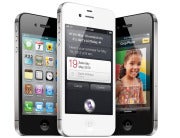
The iPhone 4S might look very similar to last year’s iPhone 4, but some intriguing specs and features are hidden under the hood.
Best current price: $499

Apple iPhone 4S: A Deep Dive Into the New iPhone's HardwareApple iPhone 4SAfter more than a year with the iPhone 4, the iPhone 4S--announced Tuesday by Apple CEO Tim Cook--seems a bit, well, underwhelming.
The hardware announced today offers no design overhaul. Apple upgraded the phone's camera from a 5-megapixel sensor to an 8-megapixel sensor, though, and the iPhone 4S will use the same dual-core A5 chip that the iPad 2 does.
4G capability? Forget it--Apple isn't going that route this time. We already knew about iOS 5 and its features for a while, but the inclusion of the Siri voice-activated software was a nice surprise.
That isn’t to say that I’m dissatisfied. Last year’s iPhone 4 still holds up among smartphones released this year, and the internal enhancements in the iPhone 4S, while a bit late to the game, are certainly welcome. The iPhone 4S is a good phone that has become even better, but I certainly wouldn’t call it “revolutionary.” And, on second thought, Apple didn’t either.
Related Slideshow Apple iPhone 4S Features Roundup: A Visual Tour

Design: No Changes, No Problem

The iPhone 4S has an identical design to the iPhone 4, but its guts are all new. Although that might be a disappointment to some people (no larger display, no slimmer body, no tear-shape game-friendly design), I am actually pretty happy with it. I really like the iPhone 4 design: It's still the thinnest smartphone available (despite Samsung’s claims), and it has a stylish, premium look thanks to the glass face and back.
I am a little disappointed to see that the screen real estate didn’t get a bump. I’m definitely not asking for a 4.5-inch display (which is too big in my opinion), but 4 inches or even 3.7 inches would make Web browsing, movie watching, and gaming a bit more comfortable. Ramon Llamas, IDC's senior research analyst for mobile devices technology and trends, says that keeping the same screen size is actually a benefit to consumers and developers.
“You have all these incredible apps [in the App Store]. If you do a different screen size, it will wreak havoc for the developer community,” Llamas says. A consistent screen size is one of the reasons why the App Store has such a high number of apps, he adds.

The Best Camera? Hard to Say
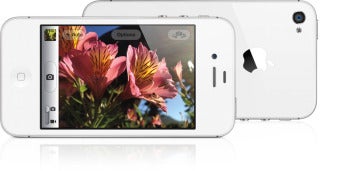
Apple iPhone 4S camera featuresApple iPhone 4S camera featuresApple isn't the only tech company that loves to tick off specs and claim its products are the first to market with a certain technology. Most companies that do so rely on consumers' failure to understand the technology or know what the specs mean. Such confusion frequently happens with camera specs, so I asked my colleague Tim Moynihan, PCWorld’s camera editor, to decipher some of the specs announced for the iPhone 4S’s camera.
Apple says that the new iPhone’s 8-megapixel camera is built around a backside-illuminated (BSI) CMOS sensor, a type of low-light-optimized sensor that debuted in Sony's cameras a few years ago. BSI sensors are now fairly commonplace in CMOS-based cameras, including both stand-alone cameras and a growing number of camera phones.
A BSI sensor is designed such that small, light-blocking wires move to the back of the sensor, making the sensor's surface a more efficient light-gathering source; as such, BSI-sensor cameras usually perform well in low-light situations without a flash. The iPhone 4's 5-megapixel sensor was also a BSI sensor, and was very good; the new sensor in the iPhone 4S is likely a higher-resolution version.
Apple also says the iPhone 4S has a five-element lens that offers 30 percent more sharpness. According to Moynihan, the lens specs sound good, but we'll need to test Apple's claims of improved image sharpness in our labs. The iPhone 4S's F2.4 lens has a wider aperture than most phone cameras do; coupled with the low-light-optimized sensor, it should perform well in low-light situations and at quick shutter speeds. The T-Mobile MyTouch 4G Slide's F2.2 aperture is still a bit wider. (The HTC-made MyTouch 4G Slide is PCWorld's top-ranking phone camera right now.)

More Pixels Make It Better?

When Apple says that the iPhone 4S camera has 60 percent more pixels than the iPhone 4 camera, it means that an 8-megapixel camera is technically 160 percent of the resolution of a 5-megapixel camera. So really, it doesn’t translate directly to improved image quality, as more megapixels aren't an indicator of better image quality on small-sensored cameras. The higher megapixel count does mean that you'll be able to print out images at a bigger size without losing resolution, or to crop images without the cropped area losing resolution.
According to Moynihan, unless the sensor size is also 60 percent bigger, the added resolution could translate to worse image quality when compared with that of the iPhone 4. When you pack a sensor of the same size with more pixels, you can end up with a lot of noise and artifacts. Again, this is something we’ll have to test when we get the iPhone 4S in.
Video: Apple Unveils Souped-Up iPhone 4S

We’re still a bit confused about what exactly Apple means when it says that the iPhone 4S has a Hybrid IR filter, as the company simply threw that term out there without actually explaining what the "hybrid" refers to. It could be a filter that allows both infrared photography and regular photography, a feature that the user can turn on or off. Moynihan suspects that the iPhone 4S’s sensor has an infrared-blocking filter built to fix any chromatic aberration, purple fringing, or color-accuracy issues caused by the sensor's being sensitive to infrared light.
If that's the case, it's a unique feature for a phone camera, although some stand-alone cameras use lens coatings and processing software to address similar issues.
As for the company's shutter-speed claims of just 1.1 seconds to take a first photo and 0.5 seconds more to take a second, we noticed that Apple did not compare the iPhone to the T-Mobile MyTouch Slide, which has the best camera of any phone we’ve tested. The Slide’s camera specs are pretty similar to the iPhone 4S’s, so we’ll have to do some head-to-head testing once we receive the Apple phone in our labs. We also plan on replicating Apple’s test with other phones we have in house.
Like many dual-core Android phones currently available, the iPhone 4S can shoot high-resolution video up to 1080p. It also features digital video stabilization--but unless it’s a radically different system than we’ve seen on other video devices, don’t expect miracles from digital-only stabilization.
Judging from the specs alone, the iPhone 4S's camera is competitive with those in the top crop of recent Android phones, including the Samsung Galaxy S II series, the HTC ThunderBolt, and the Slide. Considering the iPhone 4's excellent performance in our imaging tests, Apple gets the benefit of the doubt when it comes to those claims of improved camera performance--we just don't think the higher megapixel count has much to do with it.


Apple iPhone 4S: The Good, Bad, and Unknown

The iPhone 4S might look very similar to last year’s iPhone 4, but some intriguing specs and features are hidden under the hood.


Best current price: $499

Speed Boost

Apple's A5 processor.Apple's A5 processor.Apple claimed on Tuesday that data speeds for the iPhone 4S are double those for the iPhone 4: 5.8 megabits per second for uploads and 14.4 mbps for downloads. Ken Biba, CTO of Novarum, a company that designs wireless networks, says that the speed boost is due to the A5 chipset supporting the faster HSPA 14.4 network.
Again, Apple is playing a bit of catch-up here; we saw the first dual-core phones all the way back in January. Still, having the A5 is better than getting no processor upgrade at all. It is also encouraging that the A5 is the same chip found in Apple's iPad 2; when we reviewed the iPad 2, we noted the zippy scrolling in the browser, as well as the speed when we used iTunes and quickly navigated through various menus and galleries.
Once we have the iPhone 4S for review, we’ll subject it to our Sunspider JavaScript tests to measure browser performance. Our performance tests showed that the A5 processor in the iPad 2 was twice as fast as the processor in the iPhone 4. I’m not sure how much the chipset will benefit the iPhone 4S, but any speed enhancement is a positive thing. And the iPhone 4 isn’t exactly a slouch to begin with.
The one concern that I have (not to mention most consumers who have owned an iPhone in their lifetime) is about the battery life. If you own an iPhone, you are pretty much constantly using it--whether you’re talking, taking pictures, changing the song in iTunes, or playing a game. The battery drains fast. And unfortunately, battery life is becoming an even bigger issue with with some of the dual-core Android phones we’ve seen (especially those on a 4G network). Apple did address these concerns, however, stating that the iPhone 4S will provide 8 hours of 3G talk time and 10 hours of video playback.

No 4G: Missed Opportunity?

No 4G on Apple's iPhone 4SGiven Apple’s delay in jumping on 3G a few years ago, I wasn’t surprised when the company announced that the iPhone 4S would not support 4G LTE/WiMax networks. Ramon Llamas of IDC says that he understands why Apple sacrificed LTE/WiMax support for this release: LTE isn’t a world standard yet, and Apple would have had to make different U.S.-only models to support the technology. Right now the company’s focus seems to be on iOS 5 and rolling out iCloud. Perhaps when the iPhone 5 (which is purely mythological at this point) surfaces, Apple will embrace LTE or WiMax.
Although I am disappointed that we won’t get to see an LTE or WiMax iPhone, I have a feeling that it won’t make a difference to customers. The original iPhone still sold like crazy without 3G.
What consumers do want is reliable coverage and no dropped calls. According to Apple, the iPhone 4S can intelligently switch between two antennas for even better call quality, as well as faster download speeds. This claim needs testing in the real world, however.
At its event Tuesday, Apple showed a chart comparing the iPhone’s download speeds against other HSPA+ phones on AT&T that carry the 4G label. I respect Apple for not calling the iPhone 4S a 4G phone just because it can match the speeds of those competing handsets. HSPA or HSPA+ still constitutes a 3G network--even if a phone can produce “4G-like” speeds.
What is unfortunate, however, is that U.S customers on the Sprint and Verizon networks likely will not experience the faster speeds, since they’ll be limited to CDMA’s 3G EvDO.
I’m pleased to see the iPhone finally make it to Sprint. Lacking the iPhone, the carrier has held its own with a strong line of Android phones, but I know that quite a few Sprint customers will be happy to hear this news. Additionally, all versions of the iPhone 4S are GSM/CDMA world phones, which is a big win. However, having used an iPhone overseas, I cringe at the thought of what the carriers will charge while users travel.

Siri Voice-Command Software: Your Very Own Personal Assistant

Siri Personal Assistant on the iPhone 4SSiri Personal Assistant on the iPhone 4SPerhaps the feature I’m most intrigued by is the long-rumored Siri Personal Assistant. Voice-command software isn’t exactly a new feature in smartphones, but Siri seems so tightly integrated that it almost seems creepy.
“The best interface a person can have with a device is your voice. You can talk to it, and it talks back,” IDC's Llamas says about Siri.
But he and I both foresee some potential issues out of the gate. Tim Cook explicitly stated that Siri will take a few days to get used to your voice--but how will Siri deal with different English accents and dialects? Will Siri be able to understand my friend’s thick Boston accent? Or my aunt’s Southern accent? How will Siri deal with nonnative English speakers?
The iPhone 4S comes to AT&T, Verizon, and--for the first time--Sprint on October 14, but preorders start October 7. As soon as we have one, we will put the iPhone 4S through our rigorous tests to see how it compares against the top-rated Android phones, the soon-to-be-released Windows Phone 7 "Mango" phones, and its predecessor, the iPhone 4. Stay tuned.

 
Apple

Apple iPhone 4S

Apple iPhone 4S
MORE PICTURES
  • Apple iPhone 4S review: Fast 4ward

Popularity

Daily interest
16%
Design
7.7
Features
7.7
Performance
7.8


Samsung Galaxy S III vs. Apple iPhone 4S: It's Tough to Compare......

NEWS ANALYSIS: The comparisons between the Samsung Galaxy S III and the iPhone 4S started almost immediately, but is this fair? The real test comes when Apple rolls out the iPhone 5.

When Samsung, the new world leader in mobile phone shipments, introduces anything, a glance to the Apple iPhone is a natural response. When Samsung introduces a phone that in all likelihood will be the summertime blockbuster of Android phones, holding Samsung against Apple—or the Galaxy S III against the iPhone 4S—becomes more of a compulsion.
The sizes of the devices is notable: The iPhone 4S, with its 3.5-inch (diagonal) display, measures 115.2 by 58.6 by 9.3mm, while the S III, with a 4.8-inch display, measures 136.6 by 70.6 by 8.6mm. Still, the iPhone weighs 140 grams to the S III's 133 grams.
Apple has its Siri assistant, which users can ask to do things like send emails while they're jogging or remind them about an appointment or birthday. The S III has S Voice, more of a presence than an assistant that's waiting, anticipating and literally watching.
Still, measuring up the two smartphones anymore seems silly.
Apple is preparing to refresh the iPhone later this year. So, it is the unknown iPhone 5 that the Galaxy S III will be more properly compared against. Though, according to reports coming out of Samsung's London event, the Galaxy S III will arrive in the United States later this summer, while by most accounts the newest iPhone won't arrive until the fall.
Could consumers waiting for a new iPhone, or at least its introduction, hurt Galaxy S III sales? In the fast-moving mobile market, it's anyone's guess.
"If nothing else, Samsung's GX3 has provided a target for Apple to aim at with the iPhone 5," Charles King, principal analyst with Pund-IT, told eWEEK. "The S III's display size, CPU and RAM are all significantly superior to Apple's current generation iPhone 4S, and may well come to represent the 'table stakes' required for vendors to play in next-gen smartphones."
Plus, King added, Samsung included expandable memory and a replaceable battery in the S III.
"Neither Apple nor HTC offers those features at this time, and it seems to me that both features will become increasingly important as smartphone vendors focus on 'media-enhanced' features and user experience," said King. “Seeing how Apple, HTC and other vendors respond will say a lot about their strategic evolution and the confidence they have in their own product development efforts."
Roger Kay, principal analyst with Endpoint Technologies, notes that it's important, when comparing Apple and Samsung, to distinguish between segment domination, where Apple is the clear leader, and phone shipment numbers, where Samsung offers a greater range of price points.
"If you keep your eye on the money, it's still Apple by a couple of lengths. But Samsung is giving Apple a run for its money on technology and integration," said Kay. "So, this intense rivalry should continue for the next couple of years."
Analyst Ken Hyers, with Technology Business Research , told eWEEK he's feeling conflicted about the Galaxy S III, which seems to be a result of Samsung top brass taking the kitchen-sink route, throwing in everything they could imagine, but there's the Galaxy S III's crazy size.
"Anyone who wants to put one in their pockets will first have to sew some oversized pockets onto their clothes," said Hyers.
However, for 2012 at least, he expects it will be the iPhone of the Android community.
"The overly attentive software will probably repel a certain minority of customers, who will be either bugged by the fact that the device is overly complicated or will be creeped out by the way the Galaxy S III watches and anticipates what users want," said Hyers.
"But most folks will love the new software, which will make them start doing things with their smartphones that they never even thought about doing before they bought the Galaxy S III,” he added.


iPhone 4S

source:Wikipedia.
iPhone 4S
The iPhone 4S logo.
IPhone 4S No shadow.png
Developer Apple Inc.
Manufacturer Foxconn
Slogan(s) "It's the most amazing iPhone yet."
Form factor Slate smartphone
Release date
Units sold Four million in first three days of initial sales (October 14–17)
Operating system iOS 5.1.1
Released May 7, 2012; 9 days ago
Power 3.7V, 5.3Whr
SoC Apple A5
CPU 800 MHz dual-core ARM Cortex-A9
GPU PowerVR SGX543MP2
Storage capacity 16, 32, or 64 GB
Memory 512 MB
Display 3.5 inches (89 mm) diagonal 1.5:1 aspect ratio widescreen
LED backlit IPS TFT LCD
640×960 resolution at 326 ppi (0.61 MP)
800:1 contrast ratio (typical)
500 cd/m2 max. brightness (typical)
Fingerprint-resistant oleophobic coating on front and back glass
Audio Single loudspeaker
3.5 inches (89 mm) TRRS
Frequency response: 20 Hz to 20 kHz
Input 4 buttons
switch
microphones, touch-screen, acceleration, orientation
Rear camera 8 MP back-side illuminated sensor
HD video (1080p) at 24/30 frame/s
IR filter
Aperture f/2.4
5 element lens
Image signal processor (built-in A5)
Facial recognition (stills only)
image stabilization
Front camera 0.3 MP VGA 30 FPS (480p)
Connectivity Wi-Fi (802.11 b/g/n) (2.4 GHz only)
Bluetooth 4.0
Combined GSM/CDMA antenna: quad-band GSM/GPRS/EDGE
(800 850 900 1800 1900 MHz)
Quad-band UMTS/HSDPA/HSUPA
(800 850 900 1900 2100 MHz) (800 MHz unannounced)
Dual-band CDMA/EV-DO Rev. A (800 1900 MHz)
GLONASS, GPS
Online services iCloud, App Store, iTunes Store, iBookstore
Dimensions 115.2 mm (4.54 in) H
58.66 mm (2.309 in) W
9.3 mm (0.37 in) D
Weight 140 g (4.9 oz)
Predecessor iPhone 4
Related articles iPhone, iPad (3rd generation), iPod Touch
Website apple.com/iphone
The iPhone 4S is a touchscreen-based, slate-sized smartphone developed by Apple Inc. It is the fifth generation of the iPhone and retains the exterior design of its predecessor, the iPhone 4, but is host to a range of improved hardware specifications and software updates. The phone added a voice recognition system known as Siri and a cloud storage service named iCloud. Some of the device's functions may be voice-controlled through Siri.
On October 4, 2011, in Cupertino, California, Apple announced the iPhone 4S. On October 7, 2011, it became available for preorder in seven initial countries (United States, Canada, Australia, United Kingdom, France, Germany and Japan) with the first delivery date set for October 14, 2011 and available on that same day for direct in-store sales in those countries. It was released in 22 more countries, including Ireland, Mexico, and Singapore on October 28.
It is available for 100 cell service carriers in 70 countries, including eight carriers in the United States. For US customers, unlocked (contract-free) sales started on November 11, 2011. The Associated Press said that AT&T described early iPhone 4S demand as "extraordinary".Reception to the iPhone 4S was generally favorable. Reviewers noted Siri, the new camera, and processing speeds as significant advantages over the prior model. Four million units of the iPhone 4S were sold in the first three days of release.

Contents

  • 1 History
  • 2 Features
    • 2.1 Software
    • 2.2 Hardware
  • 3 Reception
    • 3.1 Critical reception
    • 3.2 Commercial reception
  • 4 See also
  • 5 References
  • 6 External links

History


The "Let's Talk iPhone" event was held on the Apple Campus, instead of the Yerba Buena Center for the Arts, where most non-WWDC events are held.
Speculation about Apple's next generation phone, including various specifications and a predicted name ("iPhone 5"), were widespread in the time preceding its debut. After the iPhone 4S was announced, there was some disappointment about the new phone's name. As early as May 2011, some leaks had a fairly accurate description of the product including the name "iPhone 4S", the A5 chip, HSDPA, new/better camera, and Sprint carrying.
There were no external differences between the iPhone 4 CDMA model and the iPhone 4S; all changes were internal (slight external differences between the iPhone 4 GSM model and the iPhone 4S exist, as said differences existed between the CDMA and GSM models of the iPhone 4).
The iPhone 4S was unveiled at Apple's "Let's Talk iPhone" event on October 4, 2011, on the Apple Campus in Cupertino, California. The keynote was the first in which Tim Cook led since the Verizon keynote earlier in the year. It was also Cook's first product launch without Apple co-founder, Steve Jobs, whose health was deteriorating and died the day after the announcement of iPhone 4S. Tim Carmody of Wired praised Cook for focusing on company achievements, calling him a "global business thinker" and a "taskmaster".
At the "Let's Talk iPhone" event held by Apple on October 4, 2011, Mike Capps demonstrated Epic Games' Infinity Blade II, the sequel to Infinity Blade, on an iPhone 4S. Capps boasted that the game uses Epic Games' Unreal Engine 3 and features the same graphic techniques used in the Xbox 360 game Gears of War 3.

Features

Software

The screen shown when the user first purchases an iPhone 4S. It is the setup screen.
Shown is the iPhone 4S's setup screen. The iPhone 4S is the first iPhone that does not need to connect to iTunes in order to be activated, due to iOS 5.
The iPhone 4S uses iOS, Apple's mobile operating system. The user interface of iOS is based on the concept of direct manipulation, using multi-touch gestures. Interface control elements consist of sliders, switches, and buttons. The response to user input is immediate and provides a fluid interface. Interaction with the OS includes gestures such as swipe, tap, pinch, and reverse pinch, all of which have specific definitions within the context of the iOS operating system and its multi-touch interface. Internal accelerometers are used by some applications to respond to shaking the device (one common result is the undo command) or rotating it in three dimensions (one common result is switching from portrait to landscape mode).
The 4S uses iOS 5.1.1, which was released on May 7, 2012. It can act as a hotspot, sharing its internet connection over WiFi, Bluetooth, or USB, and also accesses the App Store, a digital application distribution platform for iOS developed and maintained by Apple. The service allows users to browse and download applications from the iTunes Store that were developed with Xcode and the iOS SDK and were published through Apple. From the App Store, GarageBand, iMovie, iPhoto, and the iWork apps (Pages, Keynote, and Numbers) are available for purchase to use on the iPhone.
The 4S comes with several applications by default, including Safari, Mail, Photos, Video, YouTube, Music, iTunes, App Store, Maps, Notes, Calendar, Game Center, Photo Booth, and Contacts. Like all iOS devices, the 4S can sync with a Mac or PC using iTunes, although iOS 5 and later can be completely PC-free. Although the 4S is not designed to make phone calls over a cellular network, a user can use a wired headset or the built-in speaker and microphone and place phone calls over Wi-Fi or cellular using a VoIP application.
The iPhone 4S introduced a new automated voice control system called "Siri", unique to the 4S, that allows the user to give the iPhone commands, which it can execute and respond to. For example, iPhone commands such as "What is the weather going to be like?" will generate a response such as "The weather is to be cloudy and rainy and drop to 54 degrees today". These commands can vary greatly and control almost every application of the phone. The commands given do not have to be specific and can be used with natural language. Siri can be accessed by holding down the home button for an extra amount of time (compared to using the regular function). An impact of Siri, as shown by Apple video messages, is that it is much easier for people to use device functions while driving, exercising, or when they have their hands full. It also means people with trouble reading, seeing, or typing can access the phone more easily.
Siri is supported by the A5 chip and is currently a feature only available on the iPhone 4S. Siri also needs Internet access to function. When used for the first time, Siri does not require setup but does adapt to a user's voice over time, and can also be taught certain things directly. A number of aspects of the software can be configured, such as language and its voice feedback ability.
At launch Apple said Siri was still in beta, with a certain set of abilities with restrictions, such as being able to dictate texts but not emails, and only controlling certain apps. It is integrated with Apple's Find My Friends program (which debuted at the same time as the 4S), so Siri can potentially answer questions such as, "Where is my wife?" When it is enabled, Apple's Find My Friends lets a social group know where each other are and Siri can use this information to answer questions. Siri can be taught information, so it knows who a person is referring to when they use generic terminology on that device.
On the iPhone 4S, texting can be aided by the voice assistant, which allows speech-to-text.In addition to regular texting, messaging on the iPhone 4S is supported by iMessage, a specialized instant messaging program and service that allows unlimited texting to other Apple iOS 5 products. This supports the inclusion of media in text messages, integration with the device's voice controlled software assistant, and read receipts for sent messages. Input to the computer comes from a keyboard displayed on the multi-touch screen or by voice-to text by speaking into the microphone. Entered text is supported by predictive and suggestion software as well as a spell-checker, that includes many regional dialects like Swiss spoken French.
At announcement, plans were in place for the iPhone 4S to support many languages. Different features have different language requirements, such as keyboards compared to the word predictor and spell-checker, which needs a large dictionary of words. Language support is related to the iOS 5 operating system that the device launched with, although not always. The Siri digital assistant supported French, English, and German at launch. Since it uses a software based keyboard supported by the multi-touch display, it can support many different keyboard layouts without having to change physically. The iPhone 4S can display different languages and scripts at the same time.

Hardware

An iPhone 4 on top of an iPhone 4S.
Comparison between iPhone 4 hardware (top) and iPhone 4S hardware (bottom). Notice the repositioned antennae (the visible stainless steel which forms the perimeter around the phone).
The camera on the back side of the iPhone 4S.
The iPhone 4S features an 8 megapixel camera and 1080p video recording.
The iPhone 4S has a stainless steel, dual-antenna design. Apple redesigned the antenna in the iPhone 4S so that the cellular radio in the phone can alternate between two antennas, depending on which is sending/receiving the best signal. These two antennas form part of the stainless steel band that covers the sides of the iPhone 4 and 4S. The bands on the iPhone 4S are divided into four antennas: cellular, Bluetooth, GPS, and Wi-Fi.
The 4S uses the Apple A5 system-on-a-chip that uses an Imagination Technologies PowerVR SGX graphics processing unit, which features pixel, vertex, and geometry shader hardware, supporting OpenGL ES 2.0. The SGX543 is an improved version of the GPU used in the iPhone 4S' predecessor, the iPhone 4. However, the iPhone 4S uses a dual-core model, the SGX543, that is integrated with the Apple A5 SoC in the same way as the iPad 2. Apple claims that the iPhone 4S can process graphics up to "seven times faster" than the iPhone 4 was corroborated by Epic Games president Mike Capps.
It has 512 MB of RAM, the same as its predecessor. Maximum available storage size increased to 64 GB whilst the 32 GB and 16 GB model options were retained. The screen is the same as the prior generation iPhones; 3.5 inches (89 mm), 640×960 resolution (Apple's "retina" design). There was an improvement in interactive multimedia applications compared to its predecessor.
In both the iPhone 4 and 4S, the cellular (GSM) antenna is divided into two. Therefore, if the iPhone 4S is gripped in such a way as to attenuate one piece of the cellular antenna, the radio will switch to the other piece that isn't being gripped. The iPhone 4S can support a maximum output theoretically of up to 14.4 Mbps with HSDPA as a result of an upgraded radio chip inside the phone, in addition to being a world phone, so both CDMA and GSM customers can roam internationally on GSM networks. It also supports Bluetooth 4.0.
The camera on the iPhone 4S, also known as an iSight camera, can take 8 MP photos (3264 by 2448 pixels) and record 1080p videos at up to 30 frames per second with upgraded quality (30% better clarity, 26% better white balance, color accuracy) due to an additional lens, IR filter, a wider f/2.4 aperture, and Image signal processor (built-in A5).
In iOS 5.1, the camera can be accessed directly from the lock screen, and the volume up button doubles as a shutter trigger. The built-in gyroscope is able to stabilize the camera while recording video. Other features of the camera are macro (for close up pictures) and faster capture including being able to take its first picture in 1.1 seconds and the next half a second later.
Like the iPhone 4, the 3.5 inches (89 mm) 960 by 640 pixel Retina display supports multitouch, a technology that allows multiple simultaneous touch inputs. The iPhone 4S has two volume buttons and a ring/silent switch on the left side. On the top left there is a 3.5 mm headphone jack and a microphone that is used for both noise cancellation during calls and when in speakerphone/FaceTime (video calling) mode. The lock/power button is situated on the top right edge of the device. The right side of the device has a SIM card slot. The bottom of the device features a speaker output on the right and a microphone input on the left with Apple's proprietary 30-pin dock connector in the center. The iPhone 4S supports video out via AirPlay and various Apple A/V cables.Supported video formats include such as H.264 (1080p 30 fps max.), MPEG-4 video, and motion JPEG (M-JPEG).
In addition to user inputs, the device also has several sensors that give the phone information about its orientation and external conditions. These include a 3-axis gyro, an accelerometer, a proximity sensor, and an ambient light sensor. The iPhone 4S is stated to have 200 hours standby time (iPhone 4 300 hours), 8 hours talk time on 3G (iPhone 4–7 hours), 14 hours talk time on 2G, 6 hours 3G browsing, and 9 hours Wi-Fi browsing.Additionally, it can sustain up to 10 hours of video playback or 40 hours of audio playback.

Reception

A person holding an iPhone 4S with Siri open.
Reviewers praised the 4S's Siri as one of the most innovative new features.
An Apple Store with people trying out the iPhone 4S
Consumers interacting with the iPhone 4S in an Apple Store.

Critical reception

Reception to the iPhone 4S was generally favorable. Reviewers noted Siri, the new camera, and processing speeds as significant advantages over the prior model. Tim Stevens of Engadget said that the "iPhone 4S does everything better than the iPhone 4, but it simply doesn't do anything substantially different." Joshua Topolsky of The Verge stated that "if this were to be a car, it would be a Mercedes" and that Siri is "probably one of the most novel applications Apple has ever produced." Most reviewers thought that Siri was the most important feature on the iPhone 4S. Brian Chen of Wired said that "the fifth-generation iPhone's superb camera and speedy dual-core processor are classy additions. But Siri is the reason people should buy this phone."
Retrevo surveyed more than 1,300 U.S. consumers and reported that 71 percent of all smartphone owners were not disappointed by the new iPhone 4S but 47 percent or almost a half of current iPhone 4 owners were; 12 percent were hoping for a bigger display, 21 percent wanted a refreshed design, and 29 percent desired 4G. Echoing technology pundits, Reuters suggested that the lack of a more radical departure from the iPhone 4 could open new market opportunities for rivals. Analyst C. K. Lu of Gartner believed that Apple no longer had the leading edge and that the 4S would only sell due to brand loyalty, as fans had been expecting an iPhone 5 with a thinner profile, edge-to-edge screen, and stronger features. These same fans had also wanted a cheaper, stripped-down iPhone 4. The German phone company Deutsche Telekom said they were "satisfied" with consumer interest.
Gaming on the iPhone 4S has been likened to the PlayStation Vita, that features the same SGX GPU only in a quad-core configuration, and the Nintendo 3DS handheld game consoles. Further, the iPhone 4S' ability to process 30 million polygons per second has been compared to the PlayStation 3 and the Xbox 360 home video game consoles that can process 275 million and 500 million polygons per second respectively.
CVG's deputy editor Andy Robinson told TechRadar that the "iPhone 4S is certainly laying down some serious credibility for the iPhone as a core gaming device. Not only is it now pushing out games that simply eclipse the Nintendo 3DS visually, but features like cloud saving and TV streaming support are really exciting for gamers." The senior gaming analyst at Jon Peddie Research, Ted Pollak, believes the biggest improvement to gaming on the iPhone 4S is the voice control features, noting that "one of the features that Nintendogs players loved was the ability to talk to it. There's no reason why a game like that couldn't be done on the iPhone 4S, and much more sophisticated given the voice control shown."

Commercial reception

Unlike prior iPhone models, the number of sales of the iPhone 4 had not yet climaxed before the introduction of the 4S. Previous iPhone models were released during or after declining sales figures. In addition, iPhone 4 users had high marks for being satisfied with their phone.Nevertheless, they wanted more from Apple, forgetting that from Apple's perspective the iPhone 4 was still a hit and that new users may not be bothered by the unchanged look and feel as they did not formerly own an iPhone 4. Upon the announcement of the iPhone 4S, shares of Samsung Electronics, HTC and Nokia gained on Wednesday after the 4S was announced, while Apple stock fell. However, later in the day Apple shares rebounded ending with a 1% gain.
With the launch of the pre-order, AT&T said that the demand for the iPhone 4S was "extraordinary". Over 200,000 pre-orders were placed within 12 hours of release through AT&T. In addition, AT&T, Verizon, and Sprint sold-out pre-order stock by October 8, 2011 and by October 9 there was a 1-2 week estimate on new pre-orders to be filled. On October 20, 2011 AT&T surpassed 1 million iPhone 4S activations. On October 10, Apple announced that over one million iPhone 4Ss had been pre-ordered within the first 24 hours of it being on sale, beating the 600,000 device record set by the iPhone 4. The 16-month wait between the iPhone 4 and 4S may have contributed to overwhelming sales as well.
On October 17, 2011, Apple had announced that four million units of the iPhone 4S were sold in the first three days of release, and 25 million iOS users had upgraded to the then latest version of iOS, iOS 5, which was released upon the introduction of the phone. Phil Schiller, Apple's senior vice president of Worldwide Product Marketing, stated that the "iPhone 4S is off to a great start with more than four million sold in its first weekend—the most ever for a phone and more than double the iPhone 4 launch during its first three days." The used phone market saw unprecedented rates of trade-ins in the weeks leading up to the 4S announcement, and after it there was a drop in prices offered. Previous generation iPhones are recirculated through the markets through various methods and third-party buyers may purchase older generation iPhones. Apple also buys back previous generation iPhones under a special program. On April 24, 2012, AT&T announced that 7.6 million iPhone units were activated in Q4 2011, and 4.3 million in Q1 2012. In total, AT&T has sold 5.5 million smartphones in the first quarter of 2012, out of which 78% were iPhones.